VISUAL ACUITY
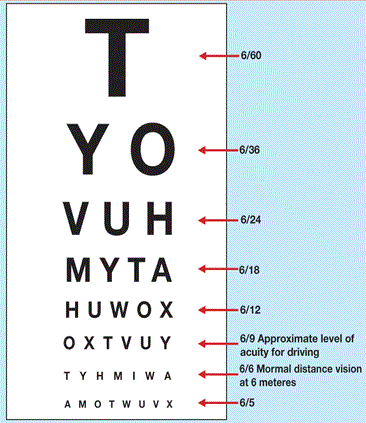 Visual acuity describes ability to see high-contrast detail in the centre of vision. It is measured using the Snellen alphabet chart or, for young children or illiterate adults, the Snellen E chart. Patients who are shortsighted should wear their glasses; if they don’t have their glasses, looking through a pinhole removes most refractive errors. The chart is placed 6m (or equivalent, using a mirror) from the subject. Using a standard chart, the result is recorded as a Snellen fraction, eg, 6/60 (UK) or 20/200 (US).
- 6/6 is ‘normal’ vision, i.e. at a 6m test distance the patient correctly identifies letters that a ’normal’ sighted person should see at 6m
- 6/60 is vision c. 10 times poorer than ‘normal’, ie, the patient sees at 6m what a person with normal vision sees at 60m.
Visual defects
- Myopia is impaired far vision (i.e. short sight)
- Hypermetropia is impaired near vision (i.e. long sight)
- Presbyopia is age-related long sight