PERIPHERAL VASCULAR DISEASE (PVD)
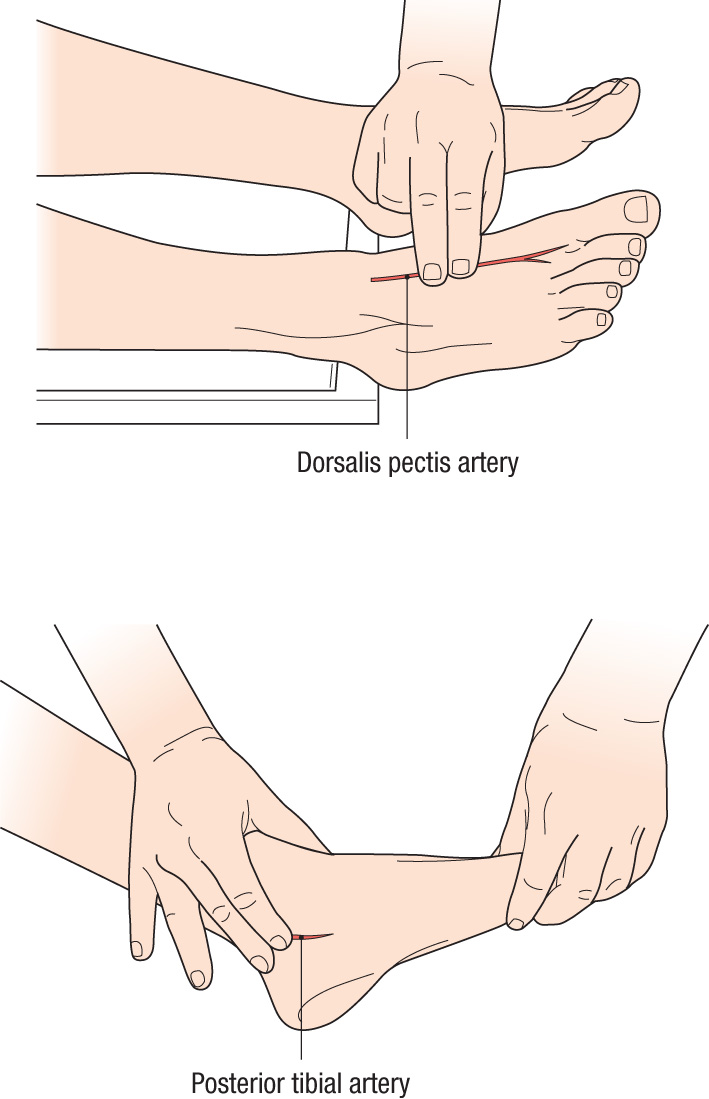
Narrowing or blockage of the arteries (atherosclerosis) restricting blood supply to the muscles and causing intermittent ischaemic pain in the legs (or rarely arms) known as intermittent claudication. More common in men and in middle to old age. Patients with PVD have an increased risk of death, MI and stroke, and management is an opportunity for secondary prevention of cardiovascular events. Smoking is a major risk factor for PVD. If the atherosclerosis is severe, walking only a few steps may cause cramping, vice-like leg pain that forces the patient to rest until it passes. Daily exercise helps by encouraging the development of a collateral circulation. The few patients whose circulation becomes so poor that the feet are painful at rest, and particularly at night, should be referred to a vascular specialist. Pulse points for assessing peripheral arterial disease (PAD)
SIGN 89 Diagnosis and management of peripheral arterial disease, 2006.https://sign.ac.uk/guidelines/fulltext/89/index.html Peripheral arterial disease Patient.co.uk Professional reference https://www.patient.co.uk/doctor/peripheral-arterial-disease Practice Nurse featured article Ten things the practice nurse can do about peripheral arterial disease Dr Ed Warren |
|