HEART FAILURE (HF)A clinical syndrome that develops when the heart is unable to deliver blood and oxygen at the rate needed by the tissues, in spite of normal or increased filling pressures. Usually the left ventricle is enlarged and ventricular contraction is poor. The most common cause of HF in the UK is CHD (HF often occurs in survivors of acute MI), and about one-third of cases result from hypertensive heart disease. Others include cardiomyopathy, valve disease, arrhythmias and atrial fibrillation. HF carries a risk of sudden death, and evidence suggests that quality of life is worse than in most other common medical conditions. However, effective treatments for heart failure have been identified that control symptoms, improve quality of life and slow disease progression. NICE CG108 Management of chronic heart failure in adults in primary and secondary care, 2010. Guideline and pathway https://guidance.nice.org.uk/CG108 ABC of heart failure Gibbs CR, Davies MK, Lip GYH. London: BMJ Books, 2000. Available for Kindle at https://www.amazon.co.uk/ABC-Heart-Failure-Russell-Davis-ebook/dp/B000SBKQMI/ref=tmm_kin_title_0 Presentation
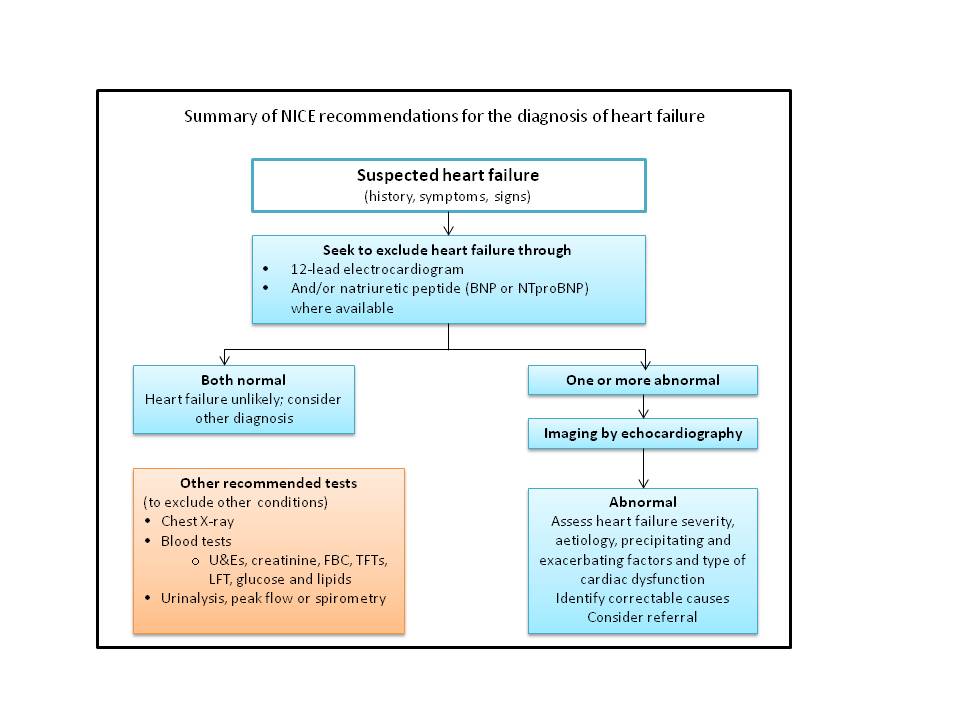
Disease marker Circulating BNP (B-type natriuetic peptide) rises in proportion to disease severity. If BNP is normal heart failure is unlikely. Diagnosis Diagnosis depends upon a combination of a good history, clinical observation, physical examination and test results. See Box for NICE recommendations on the diagnosis of heart failure.
British Heart Foundation www.bhf.org.uk British Society for Heart Failure www.bsh.org.uk British Cardiovascular Society www.bcs.com Education for Health www.educationforhealth.org Annual review Patients with HF should be reviewed annually, with recent blood test results, urine test and blood pressure reading
|
|