CURRICULUM SHOWCASE
Identify your current level of knowledge. Prepare for revalidation. Demonstrate continuing professional development. Clinically rich case-based modules.







  - Certified.gif)
Featured article
Moving on up – combination inhalers and beyond Combination and triple therapies can improve outcomes in people with asthma, but which drug and device is the right one for your patient?Read more... In the news
Featured curriculum module
Tailoring therapy to the individual patientThe goals of therapy for type 2 diabetes are to prevent or delay complications and maintain quality of life. This requires control of glycaemia, management of cardiovascular risk factors, regular follow-up and importantly a patient centred approach.1 This is in line with the Nursing and Midwifery Council (NMC) Code, which says that nurses should ‘prioritise people, practise effectively, preserve safety and promote professionalism and trust’.2 In addition, National Institute for Health and Care Excellence (NICE) guidelines emphasise the importance of taking into account individual needs and preferences.3 Read more How to use this site On this site you will find: CURRICULUM - Clinically rich, case-based, self-assessment CPD modules to help you prepare for revalidation. Click on the scrolling icons or select a module from the drop down menu to test your knowledge ESSENTIALS - back-to-basics, full text articles, by clinical topic from our Primary Care Essentials series PRESCRIBING NURSE - written for the nurse prescriber or those with an interest in prescribing and the medical management of clinical conditions ADVANCED PRACTICE - Expert articles providing in depth knowledge of key therapeutic areas CLINICAL A-Z - Information, definitions, Red Flags, live links to guidelines and relevant Practice Nurse articles GUIDELINES IN A NUTSHELL - Brief summaries of essential clinical and practice guidelines To access the Curriculum and full text articles you must be a subscriber |
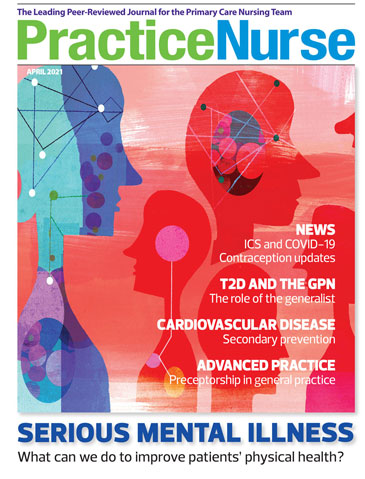
This issue
21 April 2021Vol 51 • Number 3

Other recent issues
Go to archive |
 |